Somebody writes "no shellfish" in a booking form. Six days later a plate of something finished with a shellfish stock arrives in front of them. Nobody in the chain was careless. The note simply lost its meaning at each handover, and by the time it reached the stove it was a preference rather than a medical fact.
This is worth understanding in detail, because the fix is entirely in your hands and it takes one extra clause.
The four handovers
Your note starts with us, in the requests field. It goes into the booking record and into the briefing for the evening.
From there it goes to the restaurant, usually typed into a reservation platform. Those platforms give a note a limited number of characters and no structure, so "severe shellfish allergy, anaphylaxis" and "prefers not to eat shellfish" arrive in the same grey box in the same grey font.
At the venue it is read by whoever opens the book that morning, usually a reservations manager. They decide whether it is worth carrying to the kitchen or whether the floor can handle it at the table.
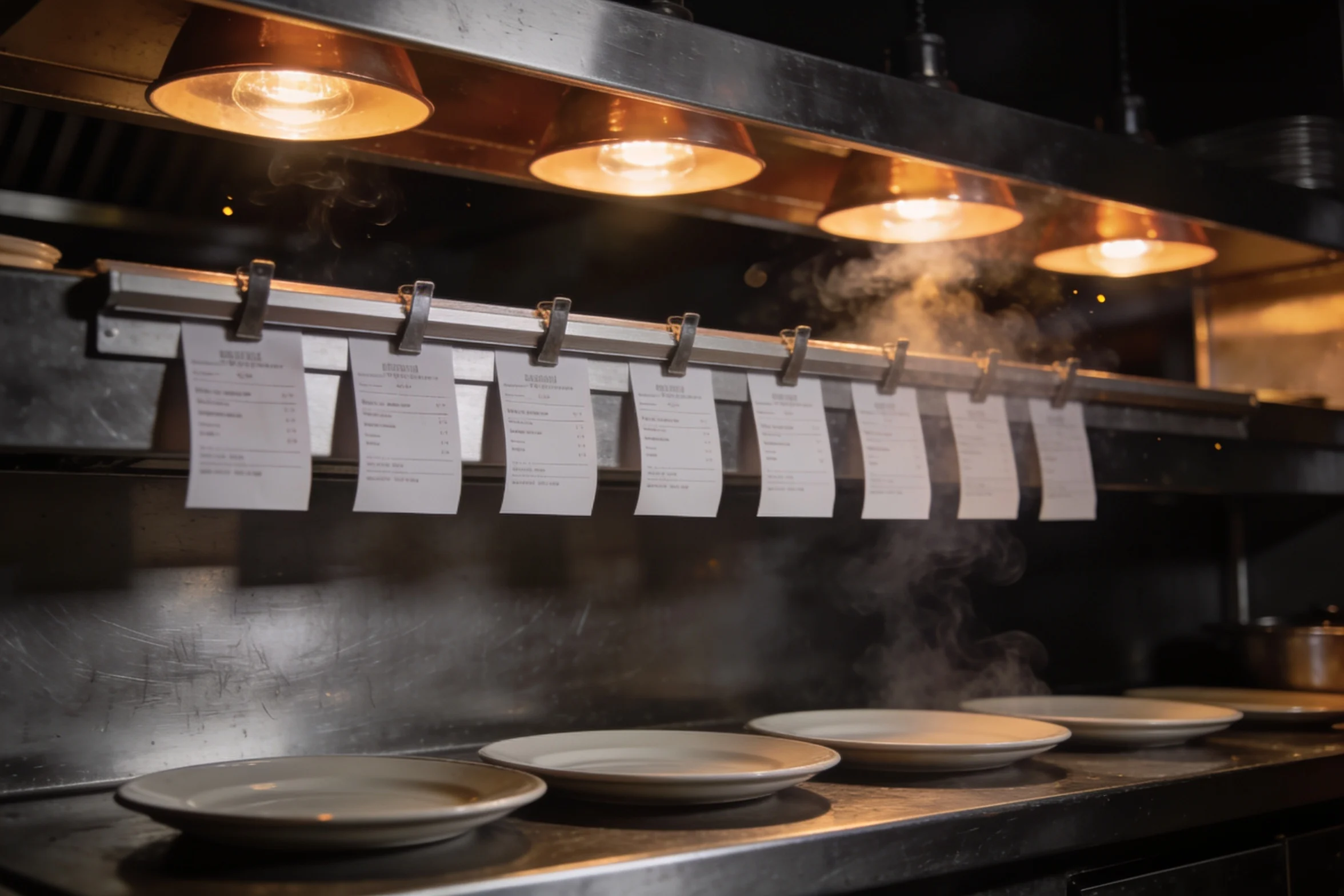
If it does reach the kitchen it becomes a line on a ticket at the pass, where it competes with eleven other tickets during service. A ticket that says ALLERGY in capitals gets a different response from a ticket that says no shellfish. Same information, different treatment, and the difference is almost entirely the wording.
Write the consequence, not the preference
This is the single change that matters. Do not write what you avoid. Write what happens if you eat it.
- Weak: no shellfish.
- Strong: shellfish allergy, requires adrenaline. Includes stock, oil and garnish.
- Weak: vegetarian.
- Strong: vegetarian, no meat or fish stock, no gelatine, no anchovy in dressings.
- Weak: no gluten.
- Strong: coeliac. Cross-contamination matters, including shared fryers and shared water for pasta.
The strong versions are longer, which feels like an imposition. It is the opposite. A kitchen that knows the stakes can plan around them at ten in the morning. A kitchen that finds out at nine at night has to improvise, and improvised food is where mistakes live.
A kitchen cannot judge how careful to be from a list of things you do not eat. Tell them what happens if they get it wrong and they will get it right.
Say it again at the table
Repeat it to whoever takes your order, once, quietly, at the start. Not because we failed to pass it on, but because the person now holding your order is the last human in the chain and they are the one who writes the ticket.
One sentence does it: "Before we start, I have a shellfish allergy, the serious kind." Any decent floor will stop, confirm, and go and tell the kitchen. If they do not, you have learned something useful about the restaurant while there is still time to order carefully.
Your companion has requirements too
This gets forgotten with some regularity. The person you are dining with may have a requirement of their own, and they will usually not raise it in front of you unprompted, because they have decided it is not their evening to complicate.
Ask us. We hold that information and we will pass it to the venue alongside yours without naming anybody. It costs you nothing and it prevents the very small awkwardness of a companion quietly moving food around a plate for an hour.
Alcohol counts as a dietary note
Somebody at most tables is not drinking, and they are almost never asked about it properly. They are asked at the moment the wine is poured, in front of everyone, which is the worst possible moment to have to explain a reason nobody is entitled to.
Put it in the note. Not the reason, just the fact: one guest is not drinking, please have something good for them. A serious restaurant will then have a proper answer ready rather than offering sparkling water with an apologetic expression.
The good answer has improved enormously in the last few years. Non-alcoholic pairings at the better kitchens are now genuinely considered rather than a soft drink in a wine glass, and a kitchen given notice will build one. A kitchen asked at the table will pour elderflower.
Worth extending to alcohol in the cooking as well, which catches people out. A sauce finished with wine, a dessert with liqueur in it, a marinade. Say if that matters, because the floor will not think to mention it.
Set menus and the tasting problem
A fixed tasting menu is the hardest case, because the kitchen has bought and prepped for a specific run of dishes and a substitution has to be built rather than swapped. Some kitchens do it superbly. Some produce a plate that is visibly the compromise version.
Give a tasting menu five working days. That is enough time for the kitchen to order something rather than remove something, and the difference between those two verbs is the difference between a good course and a bowl of vegetables.
If the notice is shorter, tell us and we will ask the question you want asked: not "can you accommodate this" but "will the substituted courses be as good as the ones they replace." Restaurants answer that honestly more often than you would think, and an honest no lets us find a different table.
What we do at our end
We carry requirements by phone as well as by platform for anything medical, because a phone call reaches a person and a platform note reaches a field. We ask for the note to be read back. We confirm on the day of the booking rather than the day it was made, since reservations staff change and books get rebuilt.
None of that is clever. It is a phone call and a follow-up, done every time, which is what most of this work turns out to be.
We also keep requirements on file rather than asking every time, so a client who told us about a coeliac diagnosis two years ago does not have to mention it again. It is on the booking before anyone asks, and the note goes out in the same wording that worked last time.
That is worth saying plainly because the alternative is what most people are used to, which is explaining a medical condition to a stranger at the start of every dinner for the rest of their life.