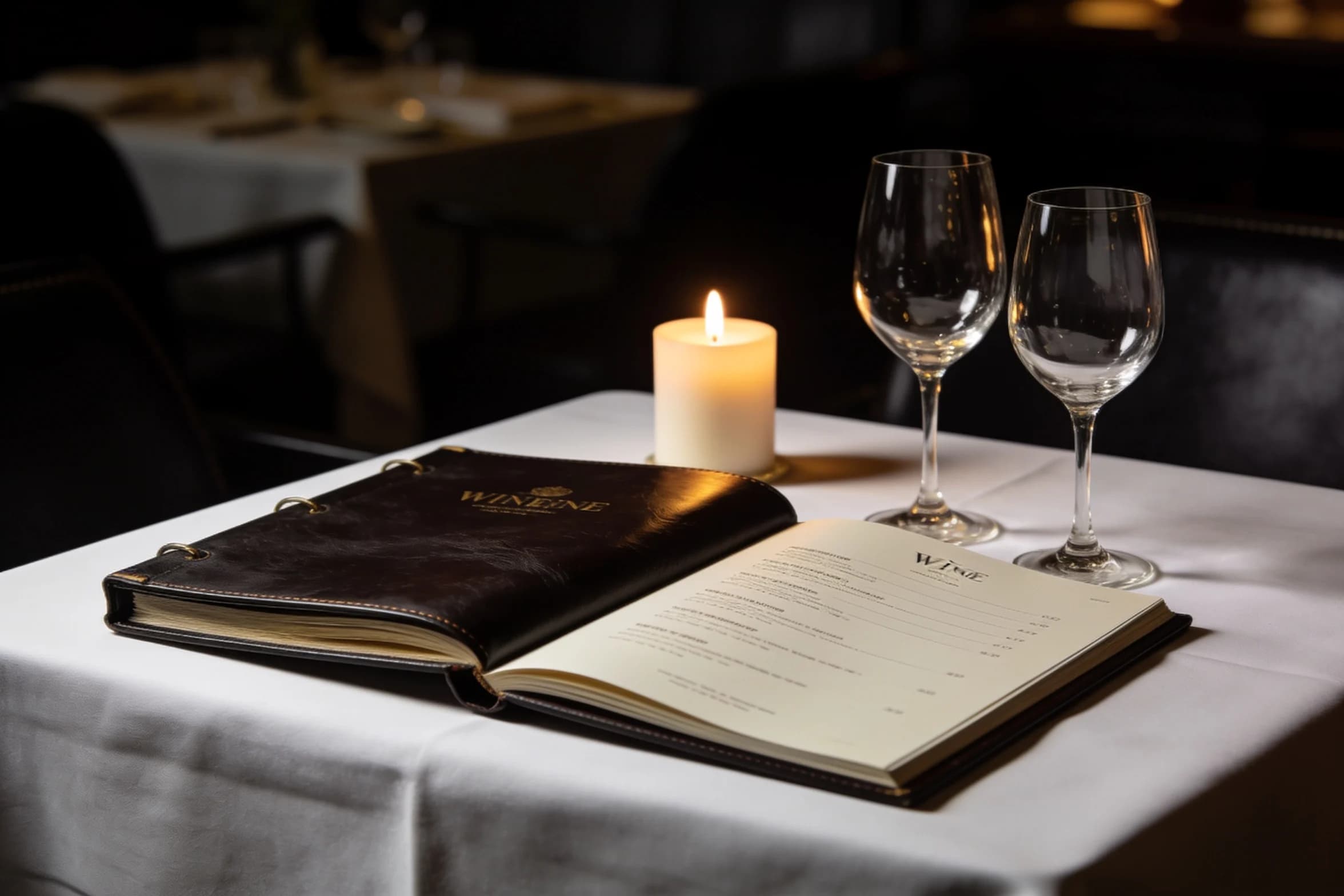
The wine list arrives and it comes to you, because you booked the table. It is forty pages, it is organised by region, and roughly nobody at the table wants this responsibility, including the person holding it.
Here is the useful thing: ordering wine well requires no knowledge of wine whatsoever. It requires knowing how to use the one person in the building who does.
The sommelier is not a test
A sommelier’s job is to sell wine that the table enjoys. Their professional interest and yours are identical, which is not true of everyone you will meet during a working week.
What they cannot do is help you if you will not say what you want to spend. Every hesitant conversation at a wine list is really a conversation about money that neither party will start.
So start it, and do it without saying a number aloud. Open the list, put a finger next to a price, and say: "Somewhere around here. What would you drink?" The number is now established, nobody at the table heard it, and you have asked a professional for their opinion rather than for a recommendation, which gets a better answer.
Point at a price. Ask what they would drink. That is the entire technique and it works in every restaurant in the world.
What to say about the food
Give the sommelier the table rather than the dishes. "Two of us are having fish, two are having the beef, and we would like one bottle to start" is far more useful than a list of courses, because they are solving for the whole table and not for a plate.
If the table is split, ask for a wine that goes with both rather than a wine per person. Half the room will not notice and the other half will appreciate not being organised.
The by-the-glass shortcut
At a business dinner where nobody is quite sure how long they are staying, order the first round by the glass and decide about a bottle after the starters. It is cheaper, it is more flexible, and it removes the risk of a bottle sitting half full on a table everyone is leaving.
It also handles the person who is not drinking, and there is almost always one. Ask what they would like at the same moment as everyone else, in the same tone, and it stops being a thing.
The tasting ritual, which is not about taste
A small pour arrives for you to try. This is widely misunderstood as a quality judgement. It is not. You are checking one thing, which is whether the wine is faulty.
- Faulty smells of wet cardboard or a damp cellar. That is cork taint and it is the only common problem
- A wine you simply do not care for is not faulty, and sending it back on those grounds is a conversation you do not want
- If you are unsure, hand the glass to the sommelier and say you would value their nose. They will tell you honestly, because pouring a faulty bottle costs them more than replacing it
- A nod is a complete response. Nothing about this moment requires vocabulary
A faulty bottle is replaced without argument in any serious restaurant, and it happens often enough that nobody is surprised.
Hand the list over if someone wants it
If there is a person at the table who clearly knows and enjoys wine, give them the list. Not as a surrender. As a gift, because they will have a very good time with it and everyone else will benefit.
One sentence when you do it: "You will do this much better than me, and stay in that range." The range is the important half of the sentence, said quietly.
This applies to a companion as well. Several of ours know wine properly, and it is on their profile because it is a genuinely useful thing to bring to a table. If yours does, hand it over and let them enjoy it. A table watching somebody order wine with obvious pleasure is a table having a nice time.
What not to do
Do not order the second cheapest bottle on the list on the theory that it is the smart choice. It is the most ordered bottle on every list precisely because everyone believes that, which is why it is rarely the best value on the page. Ask instead. The sommelier knows where the value is and will point at it if you give them a range.
Do not perform. Swirling, sniffing and pronouncing at a business dinner is a risk with no upside. Nobody at the table is impressed by wine talk, and one person almost certainly knows more than you do.
Do not check the price of the recommendation on your phone. It is visible, it is read correctly by everybody, and it undoes the whole thing.
Wine and the bill
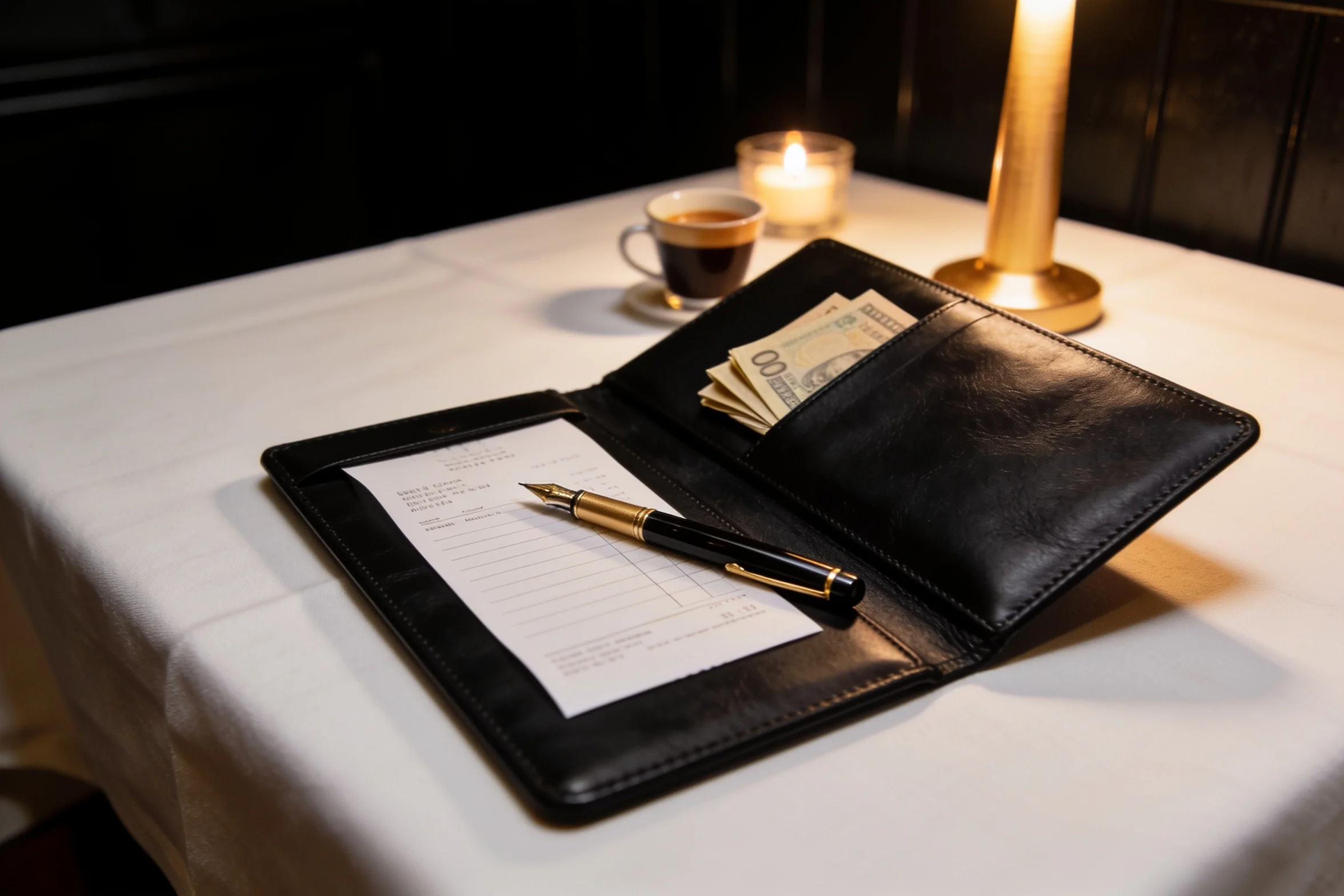
Wine is where a shared bill turns uncomfortable, because one bottle can cost more than four main courses and the people who did not drink it know that.
If the table is splitting, order modestly and order once. A good bottle in the middle of the list, drunk by everyone, is a better evening than a great bottle that half the table is quietly subsidising.
If you are paying, say so before the list arrives rather than after the bill does. It changes how the table orders and it removes the small dance at the end. One sentence to the floor as you sit down is enough: the bill comes to me, please.
Corkage is worth knowing about for the case where a bottle genuinely matters to the occasion. Many restaurants allow it, most charge for it, and all of them expect to be asked in advance. Turning up holding a bottle is the version that goes badly.
What we do beforehand
If a dinner matters, tell us the spend for wine when you book and we will pass it to the restaurant, so a sommelier arrives at the table already knowing the range. The conversation then starts at what you might enjoy rather than at what you might afford.
It is a small thing to arrange and it changes the first ten minutes of a dinner completely.