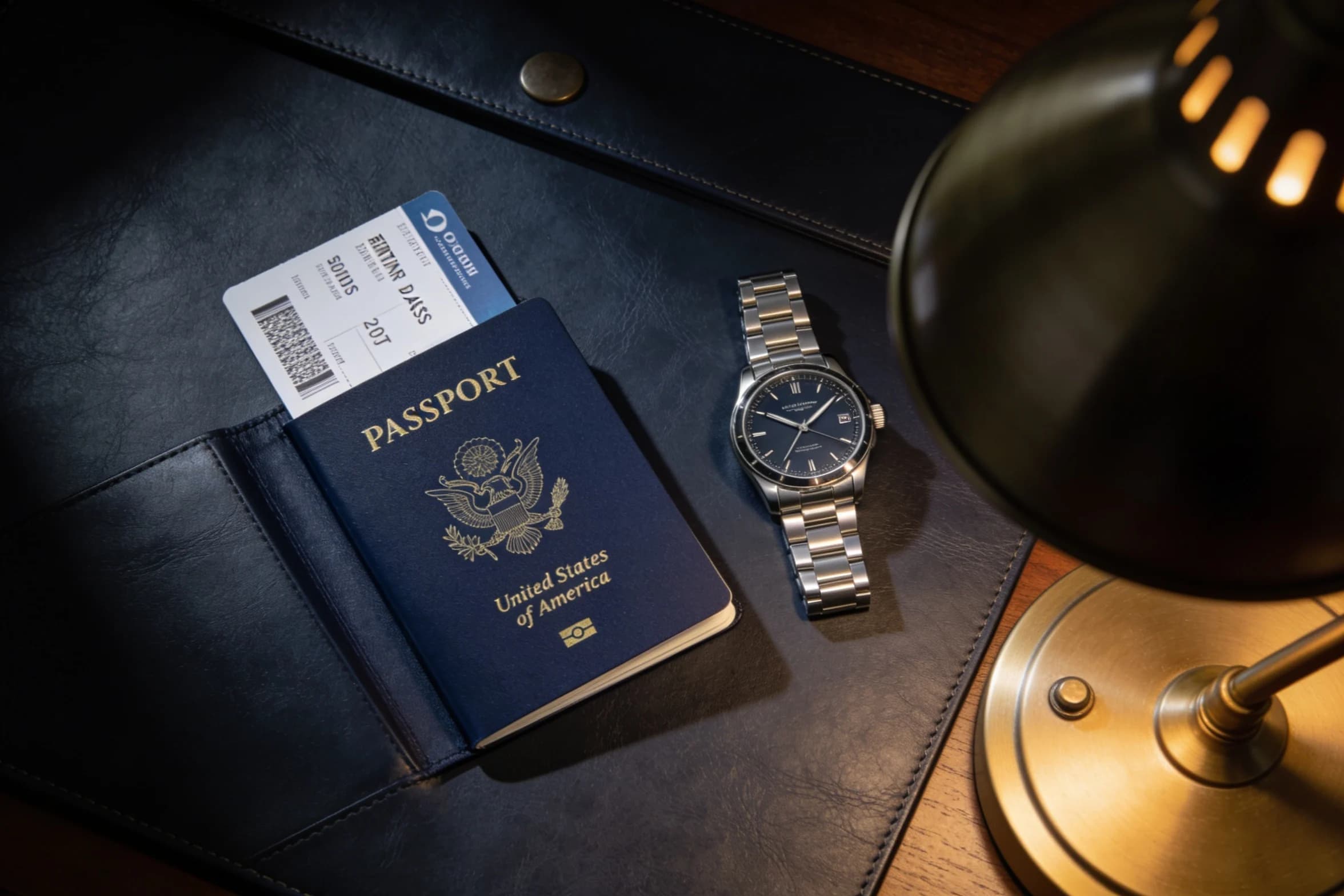
Of the international bookings that go wrong, almost none go wrong over the company. They go wrong over documents, and usually over one rule: many countries require a passport to be valid for a set period beyond your arrival date, commonly six months, regardless of whether it is still in date on the day you fly.
A passport with four months left is a valid passport. It is also, for a lot of destinations, a refused boarding. The airline checks this at the gate because the airline is the party fined if you are turned away on arrival.
The checks worth making early
- Validity beyond your return date, against the specific destination’s requirement rather than a general rule
- Blank pages, since some countries still require one or two
- Whether the route needs a transit visa, which catches people changing planes in a country they never intended to enter
- Whether an electronic travel authorisation is required, and how long it takes to issue
- Whether the name on the booking matches the passport exactly
Transit is the one people miss
You are not visiting the country where you change planes, so it does not feel like a border. Several jurisdictions disagree, and a connection that requires you to clear immigration and check a bag back in can need a visa you never considered applying for.
Direct flights avoid this entirely, and on a tight timeline that is often worth more than the fare difference.
Timelines that are realistic
Electronic authorisations often clear in days. Consular visas can take weeks, and a consulate that requires an in-person appointment can add weeks more before the application is even lodged. For any international booking we ask for three to four weeks, and more for routes we know are slow.
On every international booking the concierge checks the companion’s documents against the route before anything is reserved, and will tell you early if the timeline does not work. What we cannot check is your own passport. That one is worth looking at now rather than at the airport.