The photograph question is the one clients raise last and worry about most. It is also the one where a small amount of preparation does the most work, because a refusal improvised in front of a photographer is uncomfortable for everybody and a refusal arranged in advance is invisible.
This is a practical guide rather than a legal one. Rules on photography differ considerably between countries and venues, and if the answer matters to you in a specific case, ask the organiser in writing.
Four different cameras, four different rules
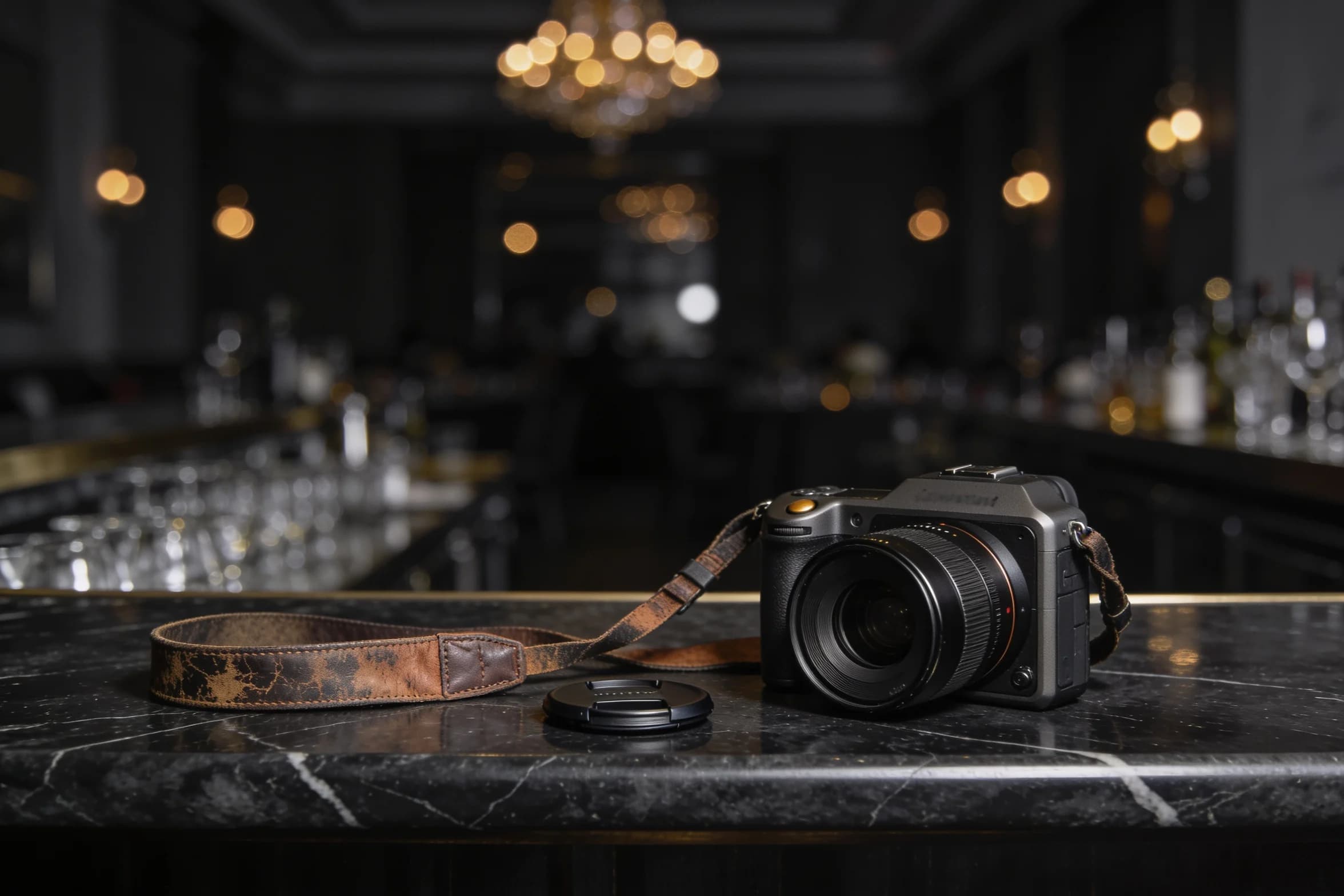
It helps to stop thinking about photography as one thing. At a typical evening there are four sources and they behave nothing alike.
The commissioned photographer works for the organiser, is briefed, wears a badge, and will almost always ask. They are the easiest to handle because there is a person to talk to and that person has instructions.
The venue account is the room’s own social media, and it moves fastest. A wide shot of a full dining room goes up within the hour, and nobody in it was asked. This is the source that surprises people.
Other guests are unpredictable and mostly harmless. Somebody photographing their dessert catches three tables behind it. The risk is not the photograph. It is where it is posted and who is tagged.
Press, at anything with a red carpet or a charity list, operate under an accreditation agreement with the organiser. That agreement is the thing to ask about, and it exists in writing.
Decide before you arrive
Pick one of three positions and tell us which. It takes a sentence and it means nobody has to work it out on the night.
- Happy to be photographed, no restrictions. Fine, and it is the most common answer
- Happy in wide shots of the room, not in posed portraits. This is the practical middle and it is easy for an organiser to honour
- No photographs at all. Also entirely workable, and it needs to be arranged in advance rather than at the door
The middle position deserves a mention because it is what most people actually want and few people think to ask for. A wide shot of two hundred people at a charity dinner is not a picture of you. A posed portrait against a branded board is, and it ends up in a gallery with names underneath it.
The email to the organiser
Send it a week before. One line: "We would rather not appear in posed photographs or on the step-and-repeat, though we are not worried about wide shots of the room." Organisers get this request regularly and it takes them ten seconds to pass to the photographer.
If you want nothing at all, say that instead, and ask them to confirm they have told the photographer. The confirmation is the useful part.
On the night
Two sentences cover everything. To a photographer who lifts a camera: "Not us, thank you." Said pleasantly, while continuing to walk, it is completely unremarkable and they will move on to the next group without a thought.
To a guest who has just taken one that includes you: "Would you mind not posting that one?" Almost everybody says yes immediately, because almost everybody has a reason of their own for understanding the request.
A refusal only becomes a scene if it is explained. "Not us, thank you" needs nothing after it.
The step-and-repeat is the one place to be deliberate. It is a queue, and stepping out of a queue is much easier than stepping off a board. If there is a photograph wall on the way in, walk past it. Nobody in the queue notices, and there is no polite way to leave it once you are on the mark.
Working out who is actually official
A lanyard means somebody printed a lanyard. At a large event there will be several people with cameras and badges and no clear relationship to the organiser, including suppliers documenting their own work and a photographer hired by one sponsor rather than by the event.
The distinction matters because the commissioned photographer has your instruction and the others do not. A sponsor’s photographer has not been told anything about you, and their pictures go to the sponsor’s marketing team rather than into the event gallery.
You do not need to audit anybody. Just say the same sentence to all of them and let them sort out whether it applied to them. "Not us, thank you" costs nothing to repeat, and repeating it to the official photographer who already knew is far better than skipping the one who did not.
Your companion decides for themselves
This is worth being clear about, because it is the part that occasionally gets assumed. A companion’s decision about being photographed is theirs, not yours and not ours. Some are happy to appear anywhere. Others will not be photographed at all, and that is a condition of working with us rather than a preference we negotiate.
Tell us the photography situation when you book and we will match the evening to somebody comfortable with it. A red carpet and a companion who does not do photographs is a bad pairing, and it is entirely avoidable at the booking stage.
The same principle governs the pictures on this site. Every photograph we publish is published with written consent from the person in it, that consent can be withdrawn at any time, and when it is withdrawn the profile comes down. It is the same standard we ask organisers to apply on the night.
If something is already posted
Ask the poster first. A direct message asking someone to remove a photograph works the overwhelming majority of the time and takes an afternoon.
If it is a venue or an organiser account, write to the business rather than commenting on the post. Businesses remove photographs on request as a matter of routine, and they would much rather do it quietly than have the request appear underneath the image.
Tell us as well, if the evening was ours. We keep the relationship with the venue and a request from the desk carries more weight than a message from a stranger.