The trip that defeats people is not the long one. It is the short one with two formal evenings in it, because formal clothes are the bulkiest thing anybody owns and four days is not long enough to justify checking a bag.
It fits. It fits in a cabin case with room left over, and the method is boring in the way that working methods usually are.
Start with the shoes
Shoes decide the whole packing list, because they are heavy, they do not compress, and every other decision depends on which pairs are coming. Work backwards from them and the rest falls out.
Two pairs for four days, worn one and packed one. For a man, black oxfords that will pass at black tie and a pair of loafers or a plain derby for everything else. For a woman, one evening shoe and one that can be walked in, which sounds obvious and is routinely ignored by people who then spend a Saturday afternoon sitting down.
Three pairs is the number that forces a second bag. If you find yourself arguing for a third pair, the argument is really that you have not decided what you are wearing.
One dark suit does more than two of anything
A single dark suit in a mid-weight cloth covers the business dinner, dinner on any other night, and the flight home if it comes to that. Change the shirt and it is a different outfit to everyone who was not paying close attention, which is everyone.
Navy travels better than charcoal because it hides a crease. Anything with a texture to it, a hopsack or a fine twill, recovers from a suitcase in a way that a smooth worsted does not.
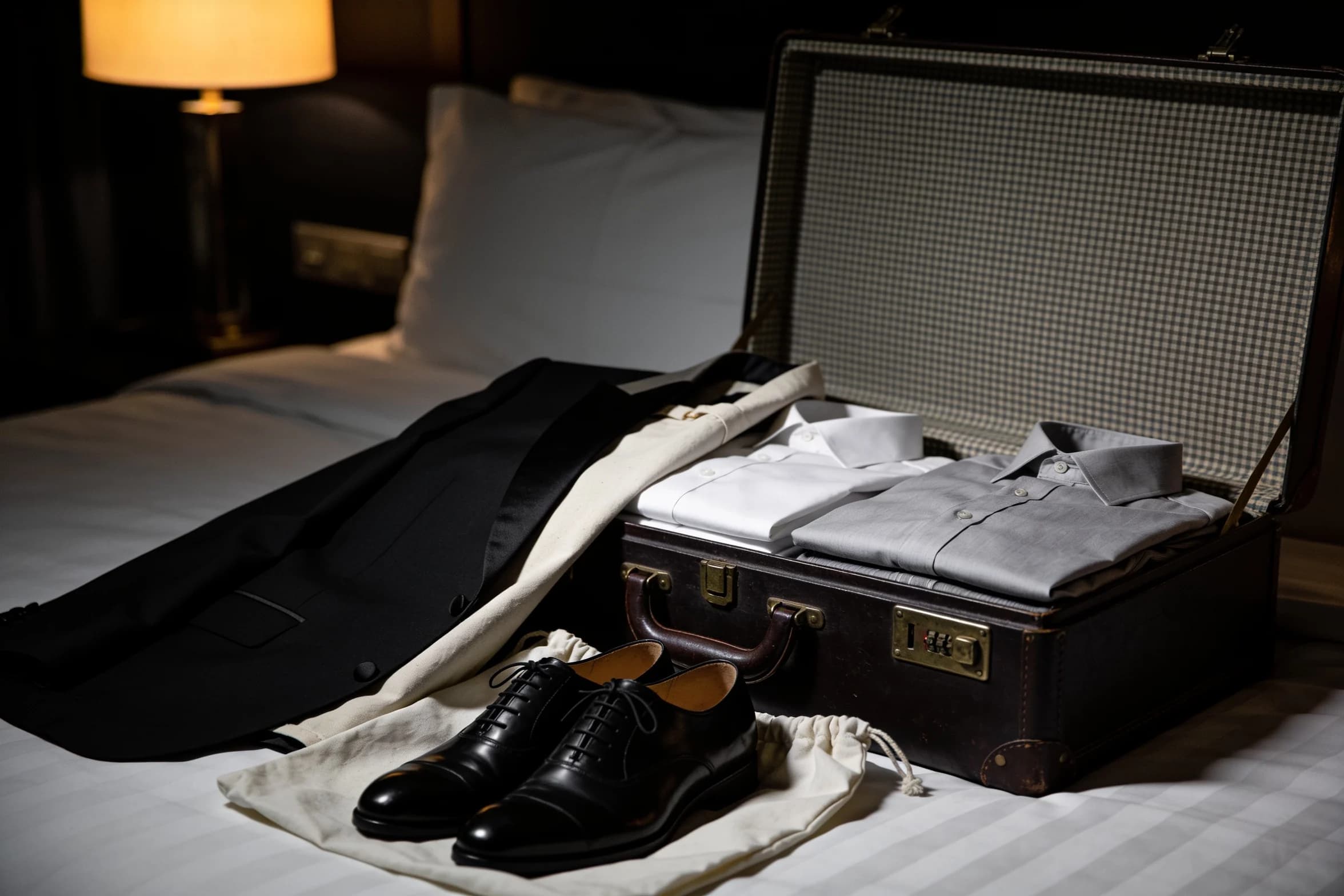
The dinner jacket is the one thing worth carrying separately in a garment sleeve rather than folding. Not because folding ruins it, but because the twenty minutes you would spend steaming it are twenty minutes you will not have.
The list, for four days with two formal evenings
- Two pairs of shoes, one worn, one in bags at the base of the case
- One dark suit, worn on the flight or carried in a sleeve
- Formal wear for the one evening that requires it, in a sleeve rather than folded
- Four shirts. Two formal, two not. More shirts is always the right answer over more of anything else, because shirts are flat
- One knit that can go under a jacket, which covers a cold room and a casual lunch
- One pair of trousers that are not suit trousers
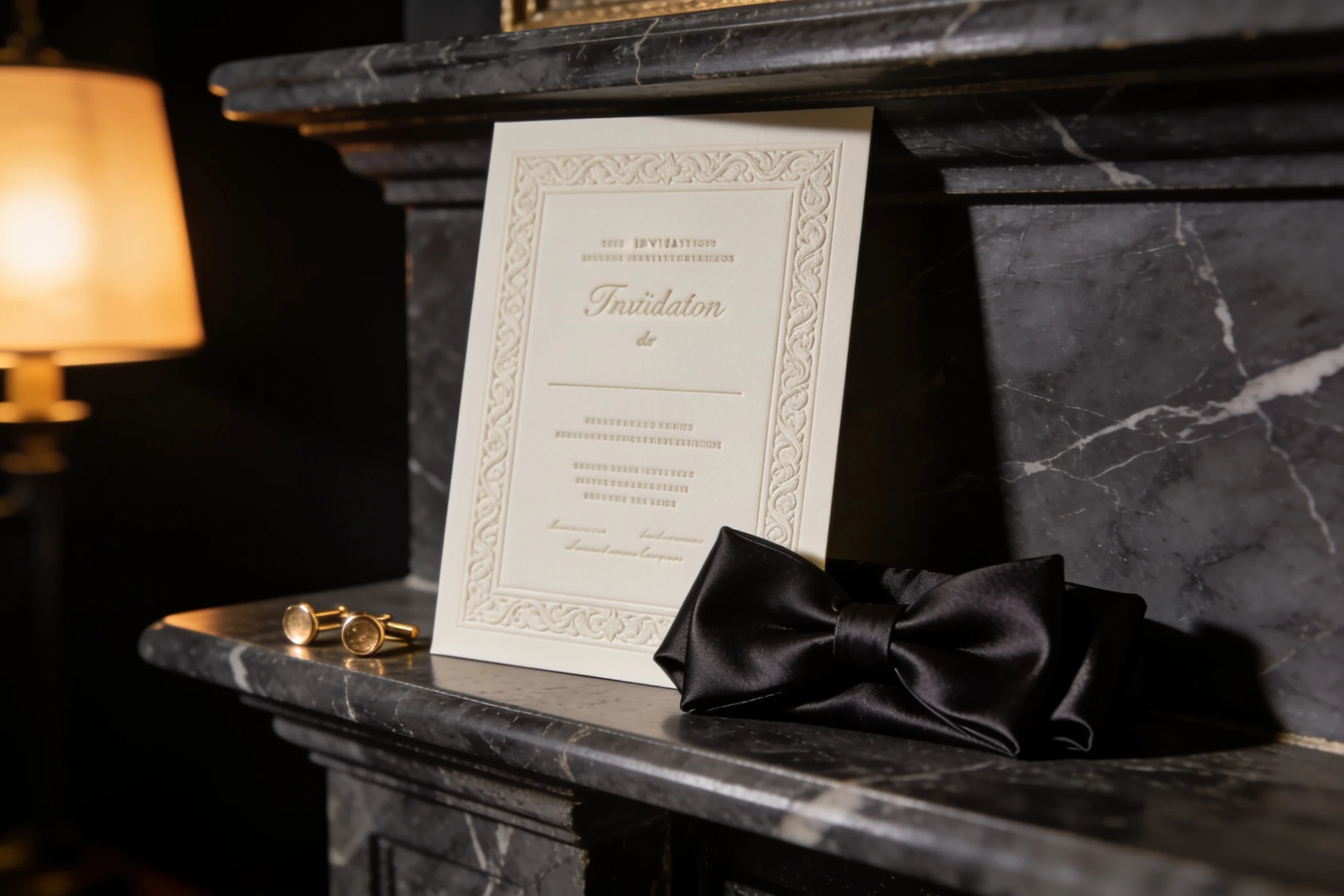
- Cufflinks, studs and a black tie in a small pouch, packed first and never unpacked between trips
That is a cabin case with space at the top. The formalwear pouch is the item worth calling out: assemble it once, keep it permanently packed, and you will never again discover at seven in the evening that the studs are in a drawer at home.
Two things worth paying the hotel for
Send the formal shirt to be pressed on arrival rather than on the evening. Same-day pressing exists everywhere and costs less than the taxi to dinner. Doing it on arrival means the shirt hangs pressed for a day, and a shirt that has hung is different from a shirt that was pressed an hour ago.
Ask for a proper hanger and a steamer when you check in. Hotel wardrobes are full of wire and plastic that will crease a shoulder overnight. It is a thirty-second request at the desk and housekeeping will bring both without comment.
The difference between looking prepared and looking rushed is almost never the clothes. It is whether they had a night on a decent hanger.
Why the bag stays in the cabin
Checking a bag on a four-day trip costs you the first evening more often than people admit. A delayed bag on a Thursday means a Thursday dinner in what you flew in, and a lost bag means a Friday spent shopping rather than a Friday spent in the city.
Airlines will also take a garment bag into the cabin on most carriers, hung by the crew in a wardrobe if the aircraft has one and laid flat in an overhead bin if it does not. Ask at the gate rather than at the desk. Gate staff are the ones who decide and they are usually accommodating about formal wear.
If a bag has to be checked, put one full evening in the cabin case: the shirt, the shoes, and whatever cannot be replaced on a Saturday morning. It is the same logic as a spare key, and it has rescued more trips than any other single habit on this list.
What goes wrong, in order of frequency
A dress code discovered late. Invitations describe dress in language that assumes you already know what it means, and the assumption is often wrong. Read the invitation the week before, not the morning of, and ask us if it is unclear. We would rather answer than watch someone buy a bow tie in an airport.
Shoes that have never been worn. A new sole on a night with standing in it is a decision you will regret by the second course. Wear them twice at home first.
No overcoat. Cities that are warm at seven are cold at midnight, and standing outside a venue waiting for a car in evening wear with nothing over it is the least glamorous part of any night out. One dark coat, and it can be the same one all week.
The companion side of it
If your companion is travelling with you, tell us the dress codes when you book rather than a day before you fly. Formal wear for a specific standard is not something anybody keeps four versions of in a wardrobe, and a week of notice means the right thing arrives rather than the nearest thing.
Two lines will do it: the standard, and the room. "Black tie, hotel ballroom, about two hundred people" tells a companion everything. "Smart" tells them nothing at all, which is why they will ask.
One more thing on a multi-day trip. Say whether the same group of people is present at more than one of the evenings. Nobody minds repeating an outfit in front of strangers and everybody would rather not repeat one in front of the same twelve faces on consecutive nights.